


There is a bad habit in modern markets. The second gold or silver takes a hard punch, critics rush in to declare the whole thesis dead.
“Gold did not protect.”
“Silver collapsed.”
“The safe haven story is over.”
Or my personal favourite, especially after not a single pundit on these media outlets talked about the wonderful gains silver and gold made – “The bubble has burst.”
I have heard them all…But, not so fast.
That reaction says more about how poorly most people understand precious metals than it does about the metals themselves. Gold and silver were never designed to make nervous investors feel good every single week. They were never meant to be emotional support assets for people who want instant validation. They exist for a different reason entirely.
They exist because financial systems get sloppy. Governments overspend. Central banks overreach. Confidence gets manufactured. Debt piles up. Inflation starts to erode your purchasing power. Then one day, what looked stable starts showing cracks. That is where gold and silver come into play.
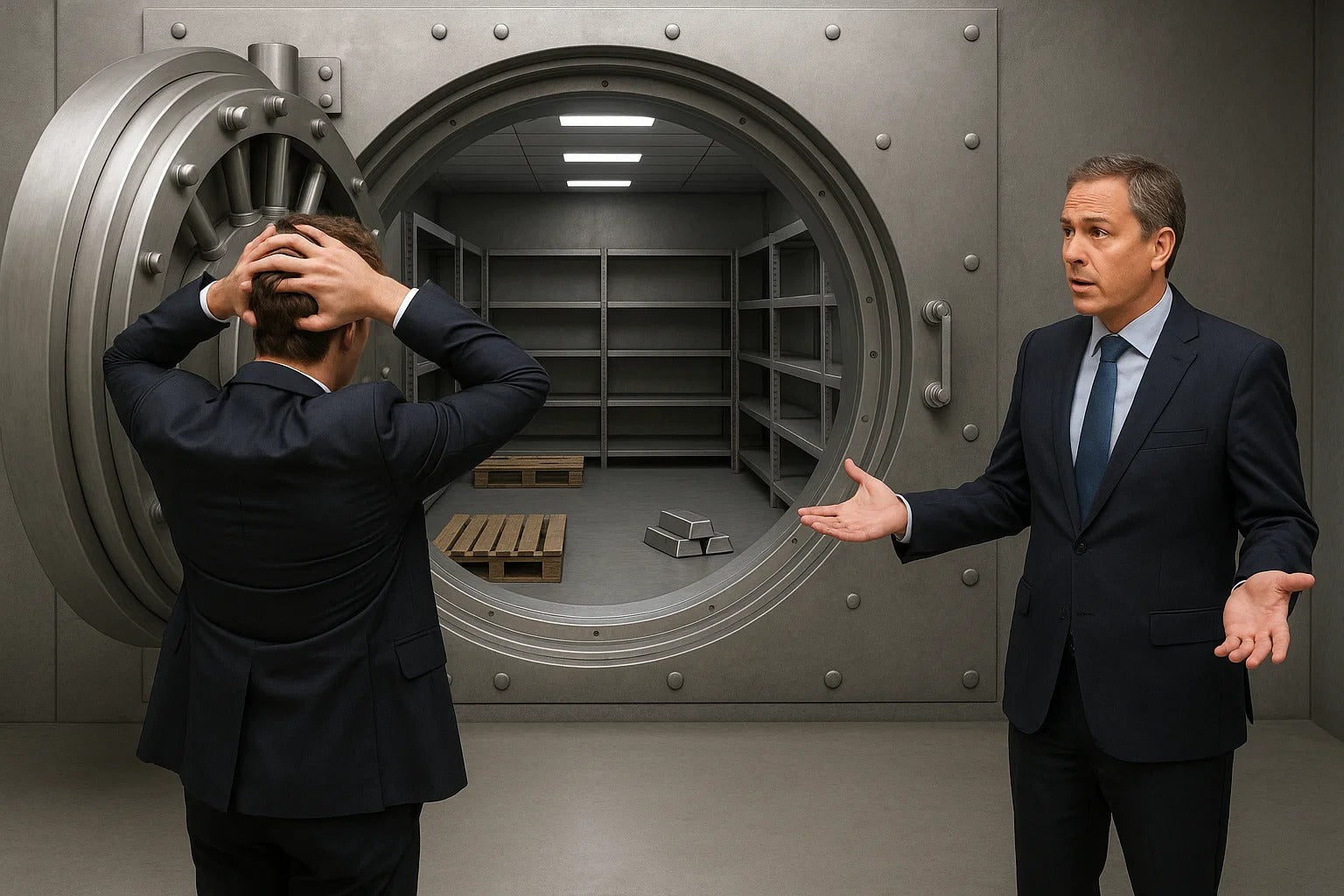
Pro-Tip: Gold and silver are not broken when their prices fall during a liquidity event, such as the one we witnessed in February. It’s quite the contrary. They are actually exposing the kind of system we are living in. A system still drowning in leverage, still addicted to easy money, and still so fragile that even real stores of value get sold when the margin clerk starts knocking. That is not failure. That is the truth coming out. That is the public acknowledging the value increase and utilizing that liquidity to cover itself during crisis moments.
February was not a collapse in confidence. It was a positioning flush
A lot of money moved into metals for good reasons. There was concern about debt, inflation, currency debasement, geopolitical instability, supply and demand, and a growing sense that policymakers were once again pretending they could manage consequences they no longer control. But not every buyer came in with conviction.
Some came in because the trade looked easy. Gold was running. Silver was catching attention. Central banks were increasing their buying. Rate cut hopes were floating around. The U.S. dollar looked vulnerable. Momentum built. Headlines followed. Then the trade got crowded. And, as you all witnessed, crowded trades do not unwind politely.
That is what this was. Not a collapse in faith. Not a rejection of metals. A flush. A sharp, ugly, fast-moving flush driven by too many people being on the same side of the boat at the same time.
When markets get stressed, people do not sell what they hate. They sell what they can. Gold and silver remain two of the most liquid, recognized, and saleable assets in the world. So when traders need cash fast, gold gets hit. Not because it stopped mattering, but because it still does. Where you may have read headlines and stories about that being a “weakness” of gold and silver, I assure you that my 22 years of experience begs to differ. That is not a weakness. That is proof that they still have real value in the real world.
Gold’s real job is not to thrill you. It is to outlast bad policy
Gold (and silver) does not exist to entertain impatient investors. It does not offer yield. It does not promise disruption. It cannot be lived in or eaten. It does not need a media team or a quarterly growth story. Gold simply sits there, unchanged, while governments and central banks repeat the same mistakes generation after generation. That is why it matters. Pay attention to this next part!
Pro-Tip: Over the next 60 months, there is every reason to believe bad policy will remain one of gold’s greatest allies. Unless you live in a world where you believe wholeheartedly that governments of the G20 will somehow cure their debt, make better economic decisions or progressively combat their unbalanced books, gold will be a vital asset of last resort for central banks and, if you are paying attention, for your own wealth as well.
The next five years are unlikely to be driven by one grand event. This will be a slower grind. Persistent deficits. Debt loads that do not get smaller. Politicians who want to spend without sacrifice. Central banks will remain trapped between inflation and recession. Trade relationships will continue to fracture. Confidence in fiat systems will continue to grow thinner every time people are told the obvious problem is temporary. And the mainstream financial donuts will broadcast this to the world continuously.
Gold does not need total collapse. It just needs the people running the system to keep doing what they have been doing. That is not a dramatic forecast. That is the baseline outlook.
Silver is the metal most likely to make fools out of the experts
Silver is a different animal. Gold moves with weight. Silver moves with attitude.
It can look brilliant one week and completely unhinged the next. That volatility scares people off, which is exactly why so many misunderstand it. Silver gets treated like a lesser version of gold, but that misses the point entirely.
Silver is not just a smaller gold trade. It is a monetary metal with industrial demand, investor psychology, and historical explosiveness all wrapped into one. That makes it harder to categorize and easier for the so-called experts to get wrong.
“Too volatile for conservative investors.”
“Too old school for growth investors.”
“Too monetary for industrial analysts.”
“Too industrial for hard money purists.”
Perfect.
That confusion may be part of silver’s opportunity over the next 60 months. If industrial demand stays firm while monetary demand reawakens under a cloud of policy distrust, silver may become one of the most disruptive metals in the entire complex. Will it be smooth? Not a chance.
Silver punishes weak conviction. It embarrasses people who think they understand it after reading one chart. But when it moves, it has a way of making yesterday’s consensus look ridiculous.
The next 60 months will be a credibility test
The biggest issue facing investors ahead is not merely inflation. It is credibility.
Can central banks really tame inflation without breaking growth?
Can governments continue spending at this pace without damaging confidence in their currencies?
Can debt expand faster than productivity forever?
Can paper wealth keep being mistaken for real wealth without consequence?
These are not abstract questions anymore. These are the questions sitting underneath markets right now. And over the next five years, the answers may not come all at once. They may arrive in stages. A policy mistake here. A bond market scare there. A currency wobble. A recession that does not behave as it should. An inflation number that refuses to cooperate. Another round of intervention dressed up as leadership.
That is the kind of backdrop where gold and silver do not need a sales pitch. They simply become harder to ignore.
This does not mean metals go straight up. They will not. There will be pullbacks, frustrating stretches, fakeouts, and sharp corrections. There will be moments when equities roar back to life, and metals look forgotten. But under the surface, the larger shift may still be moving in their favour. Consider this…
Trust is thinning.
Debt is growing.
Policy is getting sloppier.
And more investors are beginning to realize that diversification is not just about owning different assets. It is about owning assets that do not rely on the same system to survive.
Physical ownership will matter more than people think
This is where the conversation gets more serious.
Over the next 60 months, more investors will learn that exposure is not the same as ownership.
A line on a statement is not the same as holding clear title.
A fund unit is not the same as possessing real metal.
Convenience is not the same as control.
In calm periods, most people ignore that distinction because markets feel orderly and access feels permanent. In disorderly periods, that assumption is quickly tested.
That is why the difference between paper pricing and physical conviction may become more important in the years ahead. Not because the paper market disappears, but because more people will start asking harder questions.
What do I actually own?
Who holds it?
Can I access it when I want?
Who stands between me and my asset?
Those are not fringe questions. Those are grown-up investor questions. And more people will start asking them.
 Gold and silver are not failing. They are telling the truth
That is the real takeaway.
Gold and silver are not failing when they get sold in a stressed market. They are telling the truth about the environment around them.
When gold gets sold for liquidity, it tells you the system is still fragile. When silver gets whipped around by paper flows, it tells you short term pricing is still dominated by sentiment and leverage. When both regain ground despite ridicule, it tells you the underlying problem never went away.
And it has not gone away. If anything, it is becoming more visible.
So no, this volatility does not discredit precious metals. It sharpens the case for understanding them properly. Gold and silver are not about comfort. They are about credibility. They are not there to flatter short term thinking. They are there for the moments when confidence in the broader system starts looking a little too artificial.
Over the next 60 months, the strongest assets may not be the ones with the loudest story. They may be the ones people actually believe in when policy gets desperate and trust gets thin.
Gold belongs in that conversation. Silver does too.
And anyone dismissing them because of a violent short term pullback is still watching the scoreboard without understanding the game.
Yours to the penny,
Darren V. Long